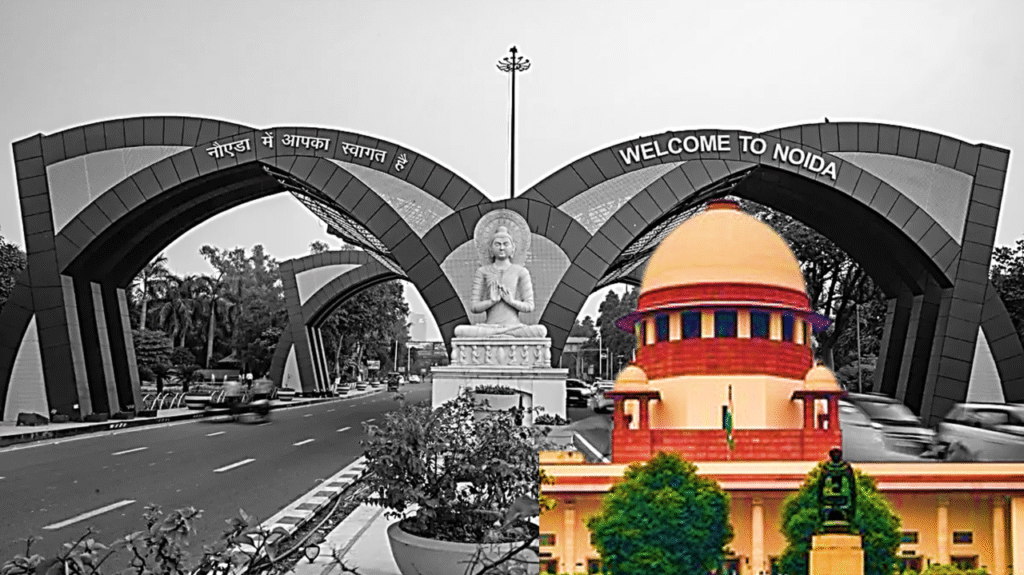

The Uttar Pradesh government has embarked on a transformative initiative to address the persistent issue of stalled real estate projects in key urban development regions, including Noida, Greater Noida, and the Yamuna Expressway Industrial Development Authority (YEIDA). This initiative is grounded in the recommendations of a high-level committee chaired by Mr. Amitabh Kant, former CEO of NITI Aayog. The committee, established under the directives of the Ministry of Housing and Urban Affairs, Government of India, was tasked with devising measures to ensure the completion of stalled projects and to safeguard the interests of homebuyers. The newly introduced policy aims to resolve regulatory and financial challenges, facilitating the smooth handover of delayed housing projects.
Background and Context
The policy is rooted in an official directive issued by the Ministry of Housing and Urban Affairs, through Order No. O-17024/1059/2017-Housing Section-MHUPA-Part(9) EFS-9138424, dated March 31, 2023. This directive led to the formation of a committee chaired by Mr. Amitabh Kant, with a mandate to explore solutions for stalled real estate projects that have languished for years, leaving thousands of homebuyers in distress.
After extensive deliberations, the committee finalized its report on July 20, 2023, and submitted it on July 24, 2023. In response to the report’s findings, the Infrastructure and Industrial Development Department of Uttar Pradesh issued Government Order No. 7774/77-4-2023-6011/2023 on December 21, 2023, establishing a new policy framework. This policy was subsequently adopted in the 133rd Board Meeting of the concerned authorities held on December 26, 2023. The policy’s primary objective is to eliminate bottlenecks in stalled projects, providing a structured mechanism for their completion while ensuring financial viability for developers and justice for homebuyers.
Objectives of the Policy
The overarching aim of the policy is to address the long-standing issue of stalled real estate projects and provide much-needed relief to homebuyers who have been waiting indefinitely for possession of their homes. To achieve this, the policy sets forth several key objectives:
- Ensuring Timely Completion of Projects: The policy seeks to ensure the completion of delayed housing projects in a time-bound manner, thereby reinstating trust in the real estate sector. Many projects have been stalled due to financial insolvency, regulatory complications, and legal battles, leaving homebuyers in a precarious position. By providing a structured relief package, the policy ensures that developers can revive these projects and fulfill their commitments.
- Mitigating Financial Burdens: The policy aims to alleviate financial pressures on all stakeholders, including developers, homebuyers, and financial institutions. This is achieved through various relaxations such as the recalculation of dues, extension of deadlines, and granting of permission-to-mortgage benefits. Furthermore, by streamlining legal and regulatory processes, the policy seeks to clear hurdles that have been preventing the completion of these projects.
- Monitoring and Enforcement: The policy provides a well-defined mechanism for monitoring and enforcement, ensuring that all parties adhere to their obligations. This includes periodic reviews by the development authorities, active involvement of stakeholders, and stringent penalties for non-compliance.
Scope of the Policy
The policy applies to several categories of real estate projects that have been affected by prolonged delays. These include group housing projects allotted by development authorities, group housing components within commercial projects, and group housing components forming part of township development schemes. Additionally, projects that are currently under litigation before the National Company Law Tribunal (NCLT) or other courts can also avail the benefits of the policy, provided they withdraw their cases or secure necessary legal approvals.
However, certain types of projects have been explicitly excluded from the policy’s ambit. These include projects developed under the Sports City Scheme, projects categorized as recreational or entertainment parks, and non-residential developments such as commercial, institutional, or industrial projects.
Key Provisions of the Policy
- Zero Period Benefits: One of the most significant relief measures under the policy is the introduction of a “zero period” provision, which grants exemption from penalties and interest for specific time periods. Projects affected by the COVID-19 pandemic are eligible for a zero period from April 1, 2020, to March 31, 2022. Additionally, projects impacted by National Green Tribunal (NGT) orders concerning the Okhla Bird Sanctuary will be considered for similar relief for the period between August 14, 2013, and August 19, 2015. Other cases may also be considered on a case-by-case basis in accordance with authority guidelines.
- Inclusion of Co-Developers: To facilitate project completion, developers will be allowed to onboard co-developers who will be officially recognized in the authority’s records. These co-developers will share joint responsibility for clearing dues and completing the project, ensuring that financial constraints do not stall progress.
- Partial Surrender and Cancellation: The policy also introduces a provision allowing developers to surrender portions of their land that are deemed unsuitable for development. In such cases, any amount already paid for the surrendered land will be adjusted against outstanding dues. If a developer fails to comply, authorities reserve the right to cancel parts of the allotted land and reassign it as necessary.
- Recalculation of Dues: To ensure fairness, outstanding dues will be reassessed by independent third-party auditors, including chartered accountants. This step is crucial in addressing disputes over financial liabilities and providing accurate calculations for payment restructuring.
- Protection of Lease Deeds: Under this policy, lease deeds of developers who agree to comply with the prescribed measures will not be canceled. This ensures continuity and prevents abrupt disruptions that could further delay project completion.
- No Additional Burden on Homebuyers: A key safeguard incorporated into the policy is that homebuyers will not be subjected to additional costs, penalties, or increased interest rates due to the delays. Any benefits granted to developers under this scheme must ultimately benefit the end-users.
Implementation Mechanism
The success of the policy hinges on robust monitoring and enforcement. The development authorities will oversee the progress of all participating projects, and project updates will be included as a regular agenda item in their board meetings. Developers failing to adhere to timelines and obligations will be subjected to financial penalties, and in severe cases, may face blacklisting, preventing them from future land allotments.
To ease the financial strain, the policy offers a staggered payment schedule for developers to clear their outstanding dues. For projects with net dues up to INR 100 crore, payments must be completed within one year. Projects with dues up to INR 500 crore have a two-year deadline, while those exceeding INR 500 crore must clear payments within three years.
This policy represents a pivotal step towards resolving the complex issues surrounding stalled real estate projects in Uttar Pradesh. By addressing financial and regulatory challenges, it provides a much-needed framework to ensure project completion while protecting homebuyers’ rights. The policy’s success will largely depend on stringent enforcement, active stakeholder participation, and transparent governance. If implemented effectively, it has the potential to revive confidence in the real estate sector and catalyze long-term economic growth in the region.